Sunday, December 7, 2025
  • Login
Forbes 40under40
  • Home
  • Technology
  • Innovation
  • Real Estate
  • Leadership
  • Money
  • Lifestyle
No Result
View All Result
  • Home
  • Technology
  • Innovation
  • Real Estate
  • Leadership
  • Money
  • Lifestyle
No Result
View All Result
Forbes 40under40
No Result
View All Result
Home Money

TEGAN HILL: Albertans will pay for Smith government’s red ink

by Riah Marton
in Money
TEGAN HILL: Albertans will pay for Smith government’s red ink
Share on FacebookShare on Twitter


Breadcrumb Trail Links

  1. News
  2. Alberta
  3. Opinion
  4. Columnists

For decades, successive Alberta governments have failed to restrain spending during periods of relatively strong resource revenues. Instead, as money flows in, governments fall into the temptation to spend even more, which only leads to trouble when resource revenues inevitably decline.

Published Dec 03, 2025  •  Last updated 2 hours ago  •  2 minute read

You can save this article by registering for free here. Or sign-in if you have an account.

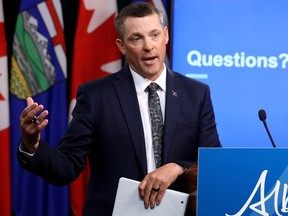
Alberta Finance Minister Nate Horner. Photo by David Bloom /Postmedia Edmonton archive

Article content

Amid news of Alberta’s new energy deal with Ottawa, the Smith government last week quietly released its fiscal update. According to the update, amid a fall in resource revenue, the government will run a projected $6.4-billion budget deficit in 2025-26 with more deficits over the next two years. Unfortunately, it’s Albertans who will foot the bill.

Advertisement 2

This advertisement has not loaded yet, but your article continues below.

Calgary Sun

THIS CONTENT IS RESERVED FOR SUBSCRIBERS ONLY

Subscribe now to read the latest news in your city and across Canada.

  • Unlimited online access to articles from across Canada with one account and fewer ads.
  • Get exclusive access to the Calgary Sun ePaper, an electronic replica of the print edition that you can share, download and comment on.
  • Enjoy insights and behind-the-scenes analysis from our award-winning journalists.
  • Support local journalists and the next generation of journalists.
  • Daily puzzles including the New York Times Crossword.

SUBSCRIBE TO UNLOCK MORE ARTICLES

Subscribe now to read the latest news in your city and across Canada.

  • Unlimited online access to articles from across Canada with one account.
  • Get exclusive access to the Calgary Sun ePaper, an electronic replica of the print edition that you can share, download and comment on.
  • Enjoy insights and behind-the-scenes analysis from our award-winning journalists.
  • Support local journalists and the next generation of journalists.
  • Daily puzzles including the New York Times Crossword.

REGISTER / SIGN IN TO UNLOCK MORE ARTICLES

Create an account or sign in to continue with your reading experience.

  • Access articles from across Canada with one account.
  • Share your thoughts and join the conversation in the comments.
  • Enjoy additional articles per month.
  • Get email updates from your favourite authors.

THIS ARTICLE IS FREE TO READ REGISTER TO UNLOCK.

Create an account or sign in to continue with your reading experience.

  • Access articles from across Canada with one account
  • Share your thoughts and join the conversation in the comments
  • Enjoy additional articles per month
  • Get email updates from your favourite authors

Sign In or Create an Account

or

Article content

Alberta’s fiscal fortunes typically follow the price of oil. For perspective, in 2015-16, oil prices fell to US$45.00 per barrel, resource revenue (e.g. oil and gas royalties) plummeted to $2.8 billion, and the Alberta government fell into a $6.4-billion deficit. In 2022-23, when oil prices jumped to US$89.69 per barrel, resource revenue skyrocketed to $25.2 billion and the government enjoyed an $11.6-billion surplus.

Article content

Recommended Videos

Article content

Volatile revenue stream

Indeed, volatile resource revenue fuels a boom-and-bust cycle in Alberta. This fiscal year, after a windfall of resource revenue and four budget surpluses, oil prices will fall to a projected US$61.50 per barrel with projected resource revenue declining by $6.6 billion year-over-year. Correspondingly, Alberta will move from budget surpluses to budget deficits.

opening envelope

Calgary Sun Headline News

Get the latest headlines, breaking news and columns.

By signing up you consent to receive the above newsletter from Postmedia Network Inc.

Thanks for signing up!

A welcome email is on its way. If you don’t see it, please check your junk folder.

The next issue of Calgary Sun Headline News will soon be in your inbox.

We encountered an issue signing you up. Please try again

Article content

Advertisement 3

This advertisement has not loaded yet, but your article continues below.

Article content

Here’s the underlying problem. For decades, successive Alberta governments have failed to restrain spending during periods of relatively strong resource revenues. Instead, as money flows in, governments fall into the temptation to spend even more, which only leads to trouble when resource revenues inevitably decline. For example, when resource revenue plummeted in 2015-16, the government ran large and persistent budget deficits, Alberta lost its “debt free” status, and piled up tens of billions of dollars in debt, which continues to burden Albertans to this day.
TMX for Fraser col
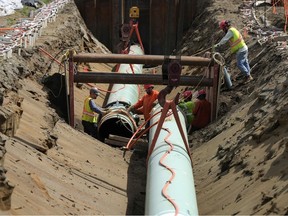
Workers participate in the construction of the Trans Mountain pipeline expansion on farmland in Abbotsford, B.C. Photo by DARRYL DYCK /THE CANADIAN PRESS archive

That’s because Albertans are ultimately responsible for financing government debt. The more government debt, all else equal, the more expensive it becomes for taxpayers. For perspective, back in 2015-16, the Alberta government’s debt interest costs (per person) were $187, but today they’re nearly $600. That’s $600 for every Albertan that’s no longer available for health care and education, or even tax relief.

Advertisement 4

This advertisement has not loaded yet, but your article continues below.

Article content

So, how does the government fix its spending problem?

While the Smith government has shown important restraint in recent years, it simply isn’t enough to get spending levels where they need to be. The government must align ongoing spending with more stable ongoing revenue sources — not onetime resource revenue. Fortunately, to rein in spending, there’s some low hanging fruit. Government employee compensation, which accounts for roughly 50% of the government’s operating spending, has climbed in recent years as more government jobs have been created. And the government continues to give billions of dollars in handouts (a.k.a. corporate welfare) to select businesses and industries. Reducing the number of government jobs and ending corporate welfare would be two big steps forward.

Not too late

The recent fiscal update brings a big deficit and more red ink.

Why is this bad news? Because Albertans will be left holding the bag.

The good news? It’s not too late to change course.

Tegan Hill is director of Alberta with the Fraser Institute.

Read More

Article content

Share this article in your social network

Tags: AlbertansgovernmentsHillInkPayRedSmithTEGAN
Riah Marton

Riah Marton

I'm Riah Marton, a dynamic journalist for Forbes40under40. I specialize in profiling emerging leaders and innovators, bringing their stories to life with compelling storytelling and keen analysis. I am dedicated to spotlighting tomorrow's influential figures.

Next Post
Federal Reserve ends three-year loss streak from Covid-era monetary policy

Federal Reserve ends three-year loss streak from Covid-era monetary policy

Leave a Reply Cancel reply

Your email address will not be published. Required fields are marked *

Forbes 40under40 stands as a distinguished platform revered for its commitment to honoring and applauding the remarkable achievements of exceptional individuals who have yet to reach the age of 40. This esteemed initiative serves as a beacon of inspiration, spotlighting trailblazers across various industries and domains, showcasing their innovation, leadership, and impact on a global scale.


NEWS

  • Forbes Magazine
  • Technology
  • Innovation
  • Money
  • Leadership
  • Real Estate
  • Lifestyle
Instagram Youtube

© 2025 Forbes 40under40. All Rights Reserved.

  • About Us
  • Advertise
  • Contact Us
No Result
View All Result
  • Home
  • Technology
  • Innovation
  • Real Estate
  • Leadership
  • Money
  • Lifestyle

© 2024 Forbes 40under40. All Rights Reserved.

Welcome Back!

Login to your account below

Forgotten Password?

Retrieve your password

Please enter your username or email address to reset your password.

Log In