HILL, THOMPSON: Housing in Calgary, Edmonton pricey but more affordable than other cities
Article content
In cities across the country, modest homes have become unaffordable for typical families. Calgary and Edmonton have not been immune to this trend, but they’ve weathered it better than most — largely by making it easier to build homes. Specifically, faster permit approvals, lower municipal fees and fewer restrictions on homebuilders have helped both cities maintain an affordability edge in an era of runaway prices. To preserve that edge, they must stick with — and strengthen — their pro-growth approach.
Advertisement 2

Article content
First, the bad news. Buying a home remains a formidable challenge for many families in Calgary and Edmonton. For example, in 2023 (the latest year of available data), a typical family earning the local median after-tax income — $73,420 in Calgary and $70,650 in Edmonton — had to save the equivalent of 17.5 months of income in Calgary ($107,300) or 12.5 months in Edmonton ($73,820) for a 20% downpayment on a typical home (single-detached house, semi-detached unit or condominium).
Article content
Recommended Videos
Article content
Mortgage payments rising
Even after managing such a substantial downpayment, the financial strain would continue. Mortgage payments on the remaining 80% of the home’s price would have required a large — and financially risky — share of the family’s after-tax income: 45.1% in Calgary (about $2,757 per month) and 32.2% in Edmonton (about $1,897 per month).

Calgary Sun Headline News
Article content
Advertisement 3
Article content
Clearly, unless the typical family already owns property or receives help from family, buying a typical home is extremely challenging. And yet, housing in Calgary and Edmonton remains far more affordable than in most other Canadian cities.
In 2023, out of 36 major Canadian cities, Edmonton and Calgary ranked 8th and 14th, respectively, for housing affordability (relative to the median after-tax family income). That’s a marked improvement from a decade earlier in 2014 when Edmonton ranked 20th and Calgary ranked 30th. And from 2014 to 2023, Edmonton was one of only four Canadian cities where median after-tax family income grew faster than the price of a typical home (in Calgary, home prices rose faster than incomes but by much less than in most Canadian cities). As a result, in 2023 typical homes in Edmonton cost about half as much (again, relative to the local median after-tax family income) as in mid-sized cities such as Windsor and Kelowna — and roughly one-third as much as in Toronto and Vancouver.
Advertisement 4
Article content
To be clear, much of Calgary and Edmonton’s improved rank in affordability is due to other cities becoming less and less affordable. Indeed, mortgage payments (as a share of local after-tax median income) also increased since 2014 in both Calgary and Edmonton.
Prioritize home-building
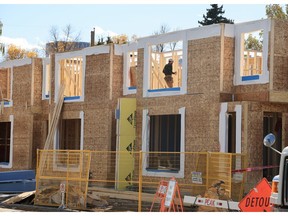
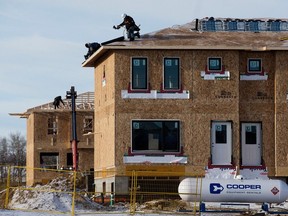
But the relative success of Alberta’s two largest cities shows what’s possible when you prioritize homebuilding. Their approach — lower municipal fees, faster permit approvals and fewer building restrictions — has made it easier to build homes and helped contain costs for homebuyers. In fact, homebuilding has been accelerating in Calgary and Edmonton, in contrast to a sharp contraction in Vancouver and Toronto. That’s a boon to Albertans who’ve been spared the worst excesses of the national housing crisis. It’s also a demographic and economic boost for the province as residents from across Canada move to Alberta to take advantage of the housing market — in stark contrast to the experience of B.C. and Ontario, which are hemorrhaging residents
Read More


Alberta’s big cities have shown that when governments let homebuilders build, families benefit. To keep that advantage, policymakers in Calgary and Edmonton must stay the course.
Tegan Hill and Austin Thompson are analysts at the Fraser Institute.
Article content