HILL, THOMPSON: Feeder break underscores governance issues at city hall
The panel doesn’t point to one cartoon villain who sabotaged Calgary’s water system. Rather, it shows how — for at least two decades — city officials and politicians lacked clear incentives to prioritize maintenance and backup capacity for Calgary’s water utility.
Article content
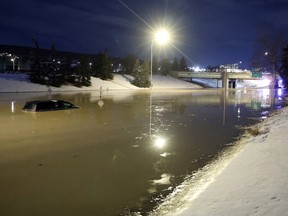
Calgarians are becoming wearily accustomed to water restrictions and disruptions. The late-December failure of the Bearspaw South Feeder Main put thousands of households under a boil-water advisory (since lifted) and continues to threaten the city’s water supply. The mayor is urging residents to conserve water to avoid “loss of life” should levels fall too low for firefighting. Plans to replace the pipe will entail “some sort of restrictions” on water usage in the months ahead. All this comes less than two years after that same pipe burst in June 2024, causing months of disruptions and prompted on-and-off water restrictions.
Advertisement 2

Article content
How did things go so wrong?
Article content
Recommended Videos
Article content
A city-commissioned independent panel report on the June 2024 Bearspaw break, released Jan. 7, offers some troubling answers.
Foreseeable failure
According to the panel, the risk of failure was foreseeable and identified roughly two decades earlier in 2004 — yet the work needed to reduce that risk was repeatedly deferred. Put differently, this wasn’t just an engineering failure — it was a governance failure.
The panel doesn’t point to one cartoon villain who sabotaged Calgary’s water system. Rather, it shows how — for at least two decades — city officials and politicians lacked clear incentives to prioritize maintenance and backup capacity for Calgary’s water utility.
Inside city hall, the panel notes efforts to reduce risks to Calgary’s drinking water supply were delayed and deprioritized due to “consensus-driven culture” that normalized deferring action on critical issues. This is perhaps unsurprising, as responsibility for water utility is carved up across departments, with “no single leader accountable for end-to-end outcomes.” Even now, the only person with a full view of the water utility’s challenges is the city manager who also oversees dozens of other major files.

Calgary Sun Headline News
Article content
Advertisement 3
Article content
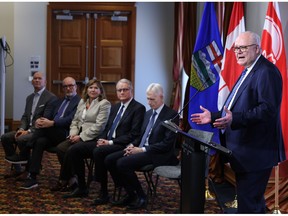
City politicians, past and present, might be tempted to think the report exonerates them when it notes that mayor and council were only given “periodic and high-level” updates about the water system with “limited transparency into operational and risk performance.” But that raises an obvious question: Why weren’t successive councils more curious about the details of a multi-billion-dollar water system critical to the daily lives of Calgarians?
In reality, city politicians had little incentive to dig deeper. Water mains typically last for decades while political careers run on shorter election cycles. Nobody wins votes for replacing a pipe that appears to be working. Nobody cuts a ribbon for “risk reduced.” And if a mayor or councillor goes looking for problems and finds them, they inherit a costly thankless task: increasing the charges that fund the water utility to fix an invisible issue today, just to prevent a disaster that may not happen on their watch.
Advertisement 4
Article content
Worthwhile suggestions
The panel has offered near-term steps to improve utility governance — such as assigning clear end-to-end responsibility to a senior city official, strengthening financial and risk reporting, and inviting greater independent oversight. But over a longer time horizon, the panel’s preferred solution is a city-owned corporation to manage Calgary’s water assets — a model commonly used in other major Canadian cities, including Edmonton.
That’s a change worth serious consideration, since it may better align the governance and financial incentives of those managing the water utility with the genuine needs of the system. A standalone utility would clearly assign responsibility for performance and reliability. It would add durable oversight from an expert board with an explicit mandate for long-term resilience. And it would require utility-style financial statements and reporting that make the cost of upkeep — and the consequences of delay — more visible to decision-makers and the public.
A working water system isn’t a luxury — it’s a core function of city government. Calgarians should demand a water-governance system that rewards long-term stewardship, makes responsibility unmistakable, and forces hard maintenance decisions before the next break.
Tegan Hill and Austin Thompson are analysts at the Fraser Institute.
Article content