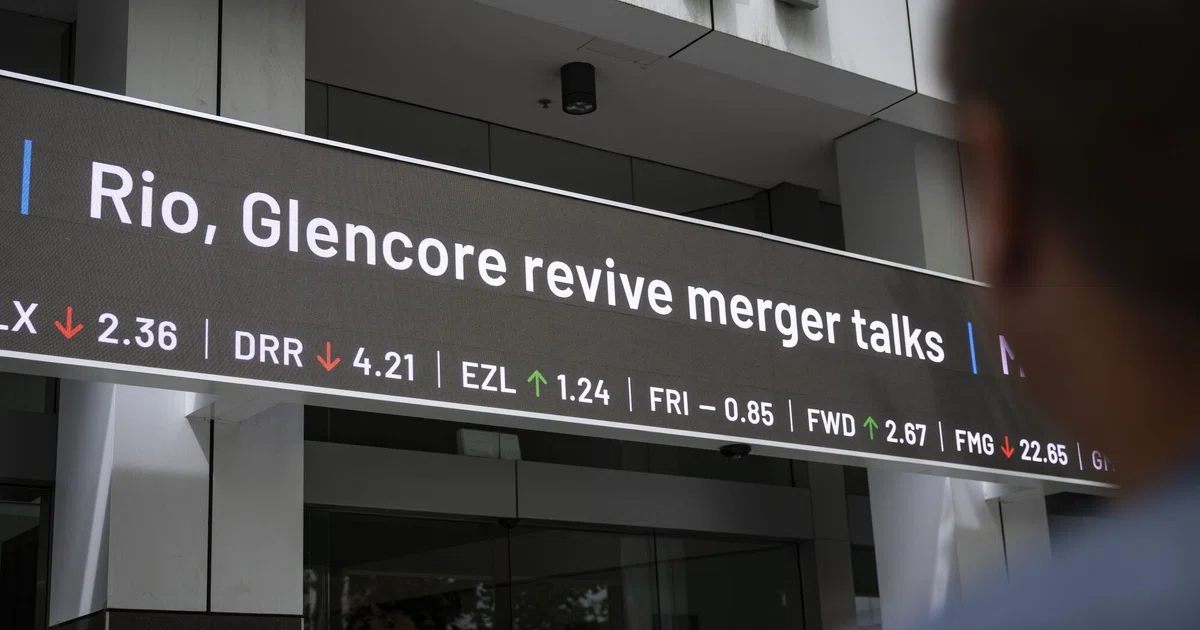
Rio Tinto-Glencore merger may need asset sales to win over China
China’s antitrust regulator is likely to be concerned about a combined entity’s concentration in copper production and marketing
[BEIJING/MELBOURNE] The proposed tie-up between Rio Tinto and Glencore could require asset sales to secure regulatory approval from top commodity buyer China, which has longstanding concerns about resource security and market concentration.
The two mining giants revealed last week that for the second time in two years they were in early merger talks – potentially creating the world’s largest mining company with a market value of more than US$200 billion.
But analysts and lawyers said the scale of their sales to China means any deal will need approval from Beijing, as have past mining mega-deals such as Glencore’s US$35 billion purchase of Xstrata in 2013.
China’s antitrust regulator is likely to be concerned about a combined entity’s concentration in copper production and marketing as well as iron ore marketing, several analysts and lawyers told Reuters.
Beijing may also see an opportunity to force asset sales to friendly entities, they added. Even before the Glencore talks were made public, Rio Tinto had already been exploring an asset-for-equity swap aimed at trimming the 11 per cent holding of its biggest shareholder, state-run Aluminium Corporation of China, known as Chinalco.
Rio Tinto’s Simandou iron ore mine in Guinea and Oyu Tolgoi copper mine in Mongolia were among the assets of interest to Chinalco, sources said then.
Navigate Asia in
a new global order
Get the insights delivered to your inbox.
To get the Glencore deal over the line, assets in Africa are especially likely sales candidates as Latin America has become less accepting of Chinese investment, according to Glyn Lawcock, an analyst at Barrenjoey in Sydney.
“China will see this as an opportunity to squeeze out assets,” he said.
China’s commerce ministry, its market regulator and Chinalco did not respond to questions about the deal. Glencore and Rio Tinto declined to comment.
Glencore precedent
Glencore has been here before. In 2013, Chinese regulators forced the Swiss-based company to sell its stake in the Las Bambas copper mine in Peru, one of the world’s largest, to Chinese investors for nearly US$6 billion in exchange for blessing its takeover of Xstrata.
“The Las Bambas deal is still looked at as a very successful solution and it’s going to be a potential playbook that regulators can draw on,” a China-based partner at an international law firm said on condition of anonymity.
Glencore also agreed to sell Chinese customers minimum quantities of copper concentrate at certain prices for just over seven years as Beijing was concerned the merged group would have too much power over the copper market.
Copper assets are in even higher demand today given the metal’s role in the green transition and artificial intelligence. Rio Tinto and Glencore are shifting their focus to the metal, as are rival miners including Australia’s BHP.
Chinese regulators will also be examining a planned US$53 billion copper-focused merger between Anglo American and Teck Resources, Teck CEO Jonathan Price said in September.
Political challenges
Copper’s rising importance is politicising the metal. The White House has alluded to China’s dominance over the supply chain as a direct threat to national security and it remains to be seen how it would react to major mineral asset sales to Chinese interests.
A combined Rio Tinto-Glencore would market about 17 per cent of global copper supply, according to Lawcock, although analysts at Barclays say the share of mine production is only 7.5 per cent and unlikely to trigger major antitrust concerns.
Nonetheless politics has doomed deals before. US chipmaker Qualcomm walked away from a US$44 billion deal to buy NXP Semiconductors in 2018 after failing to get approval from Chinese regulators in what was seen as a response to the trade war then underway between Washington and Beijing.
The inability to get Chinese regulators on board similarly sank Nvidia’s proposed takeover of Arm In previous resource deals, however, Beijing has given approval as part of a bargain.
A year before the sale of Las Bambas, Beijing required major changes to a tie-up between Japan’s Marubeni and US grain merchant Gavilon, citing food security concerns.
“Clearly this would be a long, complicated deal from a regulatory approval perspective,” Mark Kelly, CEO of advisory firm MKI Global Partners, wrote in a note, “and the presence of Chinalco on Rio’s shareholder register always complicates this picture further.” REUTERS
Decoding Asia newsletter: your guide to navigating Asia in a new global order. Sign up here to get Decoding Asia newsletter. Delivered to your inbox. Free.