

Glacier Melt May Not Aid Climate Fight
- Rutgers study finds low iron in Antarctic meltwater
- Research conducted at Dotson Ice Shelf in 2022
- Meltwater accounts for about 10% dissolved iron
- Findings challenge glacier-driven iron fertilization theory
The ancient theory that the melting Antarctic glaciers will aid in reducing the speed of climate change by liberating iron that is then utilized by growing carbon-absorbing algae blooms is now being refuted by field research, according to scientists.
According to the conclusions made by marine scientists at Rutgers University – New Brunswick, melt water discharged under an Antarctic ice shelf has significantly less bioavailable iron in it than believed. The publication reckoned in the peer-reviewed journal Communications Earth and Environmental identified the facts that discredit the notion that glacier rooted iron fertilization might feasibly boost carbon dioxide uptake in the Southern Ocean.
The theory has been floated over decades, that as the glaciers melted because of an increase in temperature the ice would release iron into adjacent water, which would drive phytoplankton explosion. Evidently, this causes these microscopic marine plants to take in carbon dioxide during the process of photosynthesis, warranting the Southern Ocean as one of the largest carbon sink in the ocean of the world.
Unfreezing Glaciers Provide Natural assumption
The unfreezing of glaciers has provided an assumption that ice will naturally fertilize the ocean with iron, as well as iron as the main investigator of the study Rick Sherrell, professor in the Department of Marine and Coastal Sciences at Rutgers. “Measurements that we have made indicate that meltwater itself contributes but a small portion of the dissolved iron.”
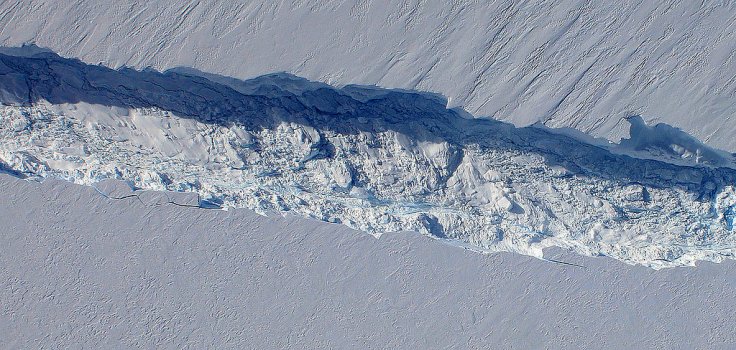
In comparison with earlier studies which were, to a large degree, a modeling exercise, the Rutgers-led team gathered direct samples as of 2022 near the Dotson Ice Shelf of the Amundsen Sea a region which contributed a large portion of the contribution of Antarctica to sea-level rise.
Scientists went on a trip on the icebreaker of the U.S. known as Nathaniel B. Palmer to find out the depth of water coming in and out of an ice shelf that was under the floating ice cover. The team estimated the contribution of glacial meltwater by analyzing dissolved and particulate iron values, and isotopic fingerprints to ascertain the source.
Wikimedia Commons
The study by Venkatesh Chinni as the lead author discovered that total meltwater contributed to a mere 10 percent of dissolved iron in outflowing water. Conversely, 62 percent were of deep ocean-water as it entered the cavity, and 28 percent included those of shelf sediment. Chinni added that “about 90 percent of the melted iron that exits the ice shelf cavity originates in the deep water and sediments beyond the cavity, and not meltdown.”
The isotopic evidence also showed that a low-oxygen liquid layer was present beneath the glacier which may be due to the grinding of bedrock and its chemical reactions. This under ice source could be as great as that offered by melting ice.
Climate Modeling Implications
Southern ocean is also important in world climatic control whereby enormous amounts of carbon dioxide are taken up by phytoplanktons. These organisms need the essential micronutrient iron, and the supply of this resource can inhibit biological productivity. It had been predicted before that greater melting of glaciers would raise the amount of iron available and that carbon uptake would increase and would partly subsidize greenhouse gas emissions.
Wikimedia commons
The new results indicate that this kind of compensating effect can be exaggerated. “In our paper we argue that in fact the melting water itself is not very rich in iron and that the majority of the iron within the melting ice is transported up and dissolved into the liquid between the underlying rock and the ice sheet not by the ice that is currently pushing the sea levels upwards,” Sherrell said.
More Complexities Involved Beyond Iron Source
The investigation does not imply that the iron fertilization is unimportant but instead, there have been more complexities associated with iron source than thought before. The results can be used in future climate models computations that use biogeochemical feedbacks in the Southern Ocean.
When the input of iron by melting glaciers is actually smaller than it is predicted, the natural carbon sequestration in the Antarctic waters may need to be reappraised. According to scientists, the findings highlight the need to use field measurements to improve the climate science.
Although the melting of glaciers is a significant contributor to sea level rise, its possible contribution to the carbon removal process as demonstrated by iron fertilization does not look so critical as previously thought.
