

Trump Assures Israeli Restraint But Threatens to Blow Up South Pars in Iran Unless Oil Facilities Spared From Attacks
- Israel strikes South Pars, Iran hits Qatar LNG facility.
- Oil prices rise above $111 as Hormuz remains closed.
- Global leaders urge halt to attacks on energy infrastructure.
- Saudi Arabia warns of potential military action against Iran.
The US-Iran war entered its most dangerous energy escalation yet on Wednesday and Thursday as Israel struck the South Pars gas field the largest natural gas reserve in the world, shared between Iran and Qatar Iran retaliated against Qatar’s Ras Laffan LNG complex, and Trump threatened to destroy South Pars entirely if the attacks continued.
Oil surged above $111 a barrel. The Strait of Hormuz remained effectively closed. And a global diplomatic scramble gathered pace as France, Germany, Arab states and the United Nations simultaneously called for a halt to strikes on civilian energy infrastructure.
Trump distanced himself from the South Pars strike almost immediately after it happened, claiming on Truth Social that the United States knew nothing about the attack and that Qatar was similarly unaware.
Israeli and US officials had told multiple outlets the strike was coordinated with and approved by the White House. Trump denied this, framing the operation as Israel acting alone out of anger. He then threatened a response that would dwarf anything yet seen in the conflict.
Macron Calls for Infrastructure Moratorium
French President Emmanuel Macron, speaking after calls with the Emir of Qatar and Trump, issued one of the sharpest diplomatic interventions of the conflict, calling for an immediate halt to all strikes targeting civilian infrastructure across the region.
German Foreign Minister Johann Wadephul separately warned of a “crisis of the gravest order” if global supply chains continued to be disrupted. The UAE Ministry of Foreign Affairs called Iran’s targeting of its Habshan gas facility and Bab field a “terrorist attack.”
IBT SG
Qatar’s foreign ministry described the Israeli South Pars strike as “a dangerous and irresponsible step.” Foreign ministers from 12 Arab and Islamic states meeting in Riyadh called on Iran to immediately halt its attacks, while also condemning Israeli strikes on Lebanon.
The Strait Cannot Be Opened Quickly
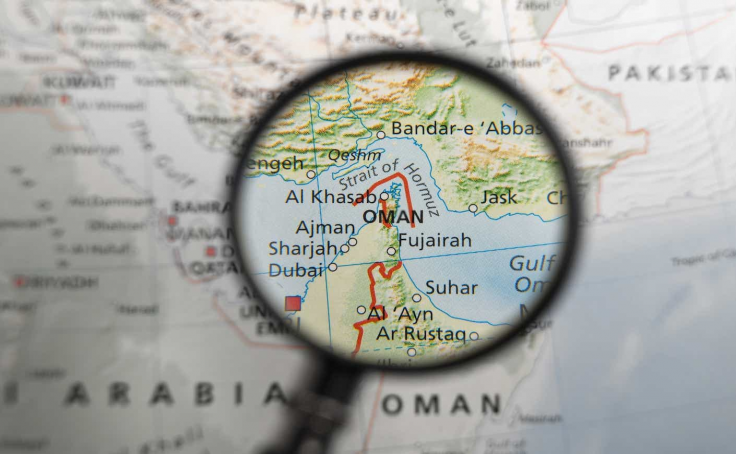
As Trump simultaneously sought to reassure markets that the US would escort oil tankers through the Strait of Hormuz, energy analysts warned that reopening the waterway was not simply a matter of naval presence. Four US minesweepers have been damaged, NATO declined a White House request for additional minesweeping vessels, and Iran’s layered defensive systems remain largely intact.
Trump, furious at NATO’s refusal to deploy minesweepers, posted on social media: “WE DO NOT NEED THE HELP OF ANYONE!” He separately said on Tuesday that the US had a “virtually unlimited supply” of munitions, contradicting the Pentagon’s request to the White House for $200 billion in emergency supplemental war funding to replenish critically depleted precision weapons stockpiles.
IBT SG
Saudi Arabia Reserves the Right to Strike Iran
Saudi Arabia’s Foreign Minister Prince Faisal bin Farhan told reporters after the Riyadh meeting of Arab and Islamic foreign ministers that the Kingdom had reserved the right to take military actions against Iran if deemed necessary the most direct warning yet from a Gulf state that the conflict could expand beyond its current participants. The IRGC had separately threatened to target oil and gas facilities in Saudi Arabia, the UAE and Qatar.
The Fed Holds, But the Bill Is Growing
The Federal Reserve held interest rates steady at 3.5 percent on Wednesday, as widely expected. Chair Jerome Powell said the central bank would not “overreact to what may prove to be temporary” energy-driven inflation, but acknowledged the situation was “highly uncertain.”
Wells Fargo estimated that if oil remained above $100 a barrel for a full year, the tax relief promised to Americans under Trump’s One Big Beautiful Bill Act worth approximately $800 per person would be entirely wiped out by inflation.
US retail gasoline prices have risen every single day since strikes on Iran began, climbing more than 35 percent from the 2026 lows. Oil was at $102 a barrel on Thursday morning, moderating after Iraq announced a deal to export oil through Turkey, bypassing the Strait of Hormuz entirely.
The war’s stated objectives remain in flux. Joe Kent, who resigned Tuesday as director of the National Counterterrorism Center, told Tucker Carlson’s podcast that there had been no intelligence warning of an imminent Iranian attack.
Also Read: Trump-Backed Voting Bill Could Backfire On Republicans, Analysis Shows
“There was no intelligence that said, hey, on whatever day it was, March 1st, the Iranians are going to launch this big sneak attack. There was none of that intelligence,” Kent said. The White House has cited an imminent nuclear threat as its primary justification for the war. Prediction markets now place the conflict’s duration at more than two months.
