

Mexican Fans Could Face Punishments for Hurling Anti-Gay Slurs at Opponents During World Cup, FIFA Rules After Viral Incidents in 2024, 2018 and 2022
Mexican soccer fans could face punishments during the World Cup if they hurl anti-gay chants or slurs at opposing players or supporters, according to a ruling by FIFA. Days before the tournament kicks off in Mexico City, the Mexican soccer federation suffered another setback after FIFA rejected its latest appeal challenging penalties over the controversial chants.
The Court of Arbitration for Sport has issued its latest ruling in the long-running dispute between Mexico and FIFA that has continued for over a decade. The decision comes ahead of Mexico’s match against South Africa on June 11 at the historic Azteca Stadium, where the controversial chant has often been heard during games.
Silencing the Protesters
X
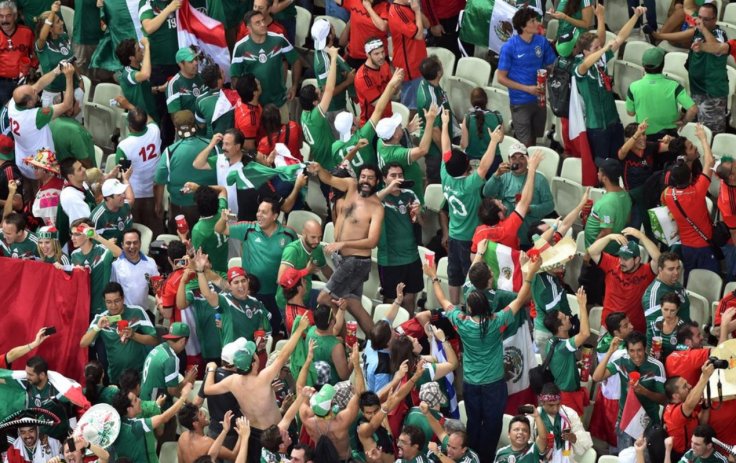
The chant, a single-word slur that literally translates to “male prostitute” in Spanish, is most commonly shouted by fans when the opposing goalkeeper takes a goal kick. It first gained widespread international attention during the 2014 World Cup in Brazil and was heard again at the 2018 tournament in Russia and the 2022 World Cup in Qatar.
Despite repeated appeals and educational campaigns from the Mexican soccer federation aimed at stopping the behavior, some supporters have continued to use the chant.
The latest case before the Court of Arbitration for Sport stemmed from FIFA disciplinary actions related to incidents during Mexico’s 2024 matches against Bolivia, Uruguay, Brazil, and the United States.
Anti-discrimination observers reported hearing the chant during those games. Similar monitors are expected to be present throughout the 104 matches of the upcoming World Cup across Mexico, the United States, and Canada.
CAS upheld the fines imposed by FIFA, leaving Mexico responsible for a total of 140,000 Swiss francs (about $178,000) in penalties. However, the court did provide some relief by overturning a sanction that would have required part of a stadium to be closed during a FIFA-organized match, such as a World Cup game.
No More Tolerance
X
The court said its panel of judges considered arguments presented by the Mexican federation during a hearing in Miami in March, including evidence that the organization has been working since 2015 to educate fans and implement measures aimed at preventing and ultimately eradicating the chant from matches.
“They (the judges) observed that the conduct of the fans was collective and widespread, and not merely a one-off occurrence,” CAS said in a statement.
While acknowledging the “unique nature” of the challenge faced by Mexican soccer authorities, the court ruled that the federation could not avoid responsibility for the conduct of its supporters.
At the same time, some observers have argued that fan-led efforts to discourage the chant have been more effective than FIFA’s disciplinary measures, suggesting that supporters themselves may play a key role in changing the behavior.
“On the one hand, FIFA fines aren’t working,” The Athletic’s Matt Slater wrote on X. “But, on the other, we can’t just let some Mexican fans keep screaming an anti-gay slur each time the oppo goalie boots it. Self-policing by fans is the best way to fix this…now would be a good time to start.”
Meanwhile, Mexican soccer officials have introduced a new campaign aimed at discouraging the chant among supporters.
Called “La Ola Sí, El Grito No” (“The Wave Yes, The Chant No”), the initiative features members of Mexico’s 1986 World Cup squad urging fans to celebrate by participating in the wave rather than using the controversial chant.
Although the wave is widely associated with Mexico, its origins are generally credited to American fan George “Krazy” Henderson, who began organizing the crowd movement at the Oakland Coliseum in 1981. The tradition gained worldwide recognition during the 1986 World Cup in Mexico, where it became a fan favorite and eventually earned the nickname the “Mexican Wave.”
“This campaign aims to raise awareness among fans about the importance of supporting the Mexican national team with the wave and not with discriminatory chants that FIFA sanctions,” the federation said in a statement.
Mexico is set to make history as the first nation ever to host the FIFA World Cup on three separate occasions. The tournament begins on June 11, when Mexico takes on South Africa in the opening match. After previously hosting the World Cup in 1970 and 1986, Mexico will once again welcome the event, this time as a co-host alongside the United States and Canada.
