Boeing safety in spotlight at US Senate hearing
BOEING is expected to face a bruising once-over Wednesday as company critics testify at a US Senate hearingg, including an employee who has characterised the top-selling 787 as prone to disaster.
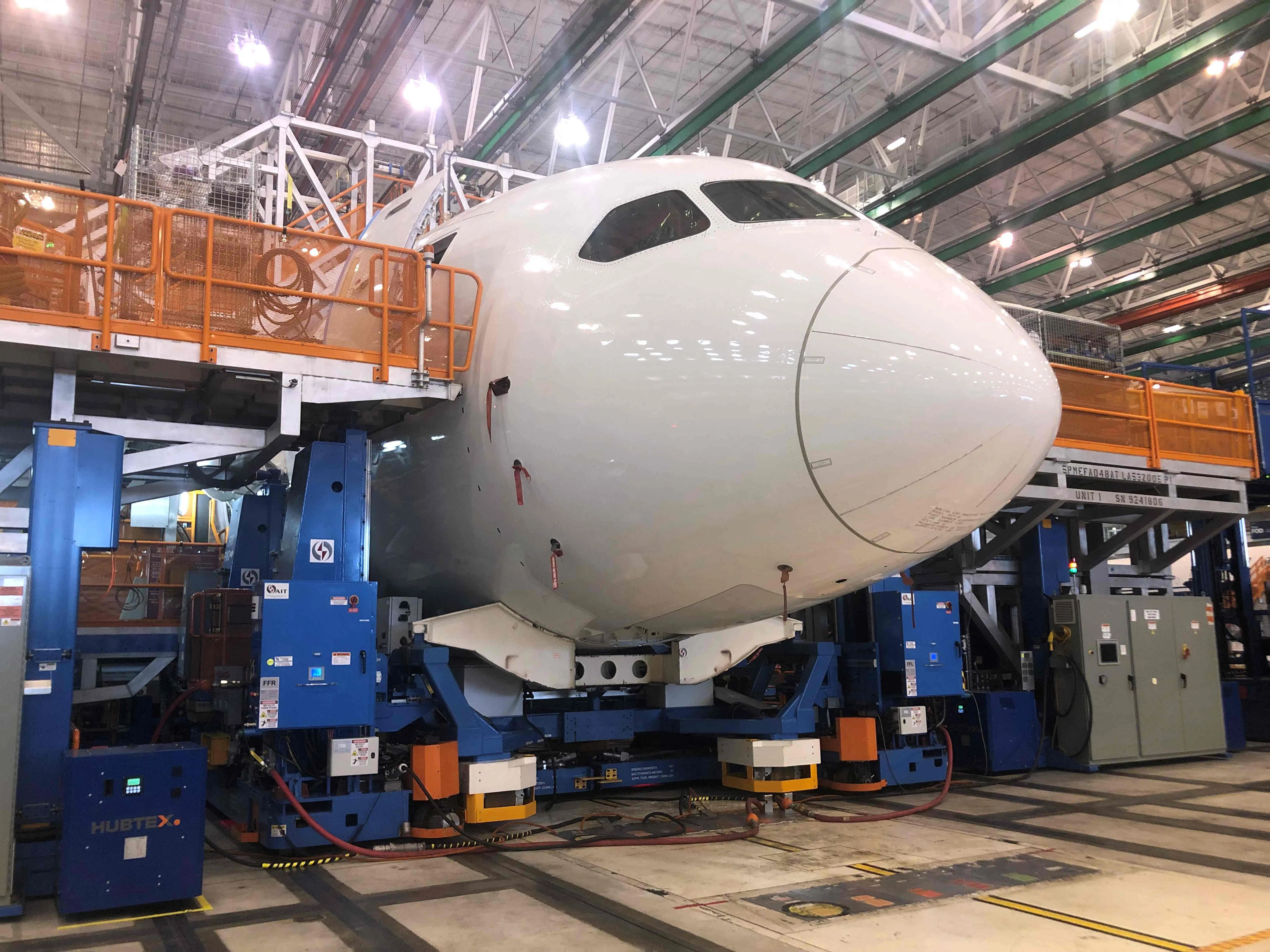
In a preview of his congressional testimony, Boeing engineer Sam Salehpour said in an interview broadcast Tuesday night that the 787 Dreamliner should be grounded immediately because of the risk it could “fall apart” mid-air, he told NBC.
Boeing, which has faced significant scrutiny since a near-catastrophic incident in January, sought on Monday to proactively defend itself, hosting a media event with two senior engineers who provided detailed explanations attesting to aircraft safety and rebutting Salehpour’s claims.
Wednesday’s hearing, titled “Examining Boeing’s Broken Safety Culture: Firsthand Accounts,” will be chaired by Democratic Senator Richard Blumenthal of Connecticut, who has described Salehpour’s allegations as “deeply serious.”
“If Boeing continues to disregard safety and quality and put profits over everything else, the public’s endangered because it creates gaps in the manufacturing integrity,” Blumenthal said on Connecticut Public Radio.
Besides Salehpour, the witness list includes former engineers with Boeing and the Federal Aviation Administration (FAA) who now work at the Foundation for Aviation Safety, which has also criticised Boeing’s practices.
GET BT IN YOUR INBOX DAILY
Start and end each day with the latest news stories and analyses delivered straight to your inbox.
The fourth listed witness is former pilot Shawn Pruchnicki, now at Ohio State University, who expressed skepticism about Boeing’s statements in a recent CNN interview.
Boeing representatives will not testify at the hearing, but the company said it is cooperating with the inquiry.
“We have offered to provide documents, testimony and technical briefings, and are in discussions with the Subcommittee regarding next steps,” a spokesman said.
FAA sign-off
The hearing comes as regulators escalate scrutiny of Boeing in the wake of a near-disastrous January 5 Alaska Airlines flight, in which a 737 MAX was forced to make an emergency landing after a fuselage panel blew out in mid-flight.
The incident revived major questions around Boeing’s safety practices that had initially arisen following two fatal crashes in 2018 and 2019, but which had later subsided following a lengthy grounding of the 737 MAX.
Salehpour has alleged that the 787 Dreamliner contains gaps between parts well above company standards, a dynamic that could “ultimately cause a premature fatigue failure without any warning,” creating unsafe conditions “with potentially catastrophic accidents,” according to an official complaint to the FAA released by his attorneys.
The gap issue was one of the factors in the 2020-22 period during which Boeing halted deliveries for stretches.
In a written rebuttal last week after Salehpour’s charges became public, Boeing said claims about serious structural problems on the 787 “are inaccurate and do not represent the comprehensive work Boeing has done to ensure the quality and long-term safety of the aircraft.”
Testing of the 787 establishing aircraft safety was “completed with full transparency and under the oversight of the FAA,” Boeing said.
At Monday’s event, Boeing officials said that around 99 per cent of the gaps conform to the .005 inch standard gap measurement, although a small percentage exceeds it.
However, testing showed “zero fatigue,” said Steve Chisholm, chief engineer for Boeing Mechanical and Structural Engineering.
An FAA spokesman said the agency’s evaluation of the 787 included requirements “to ensure the aircraft are safe for flight” after the gap issues were raised.
“Every aircraft flying is in compliance with the Airworthiness Directive (AD),” the FAA spokesman said. “Boeing has either completed or is working on long-term corrective actions. The FAA continues to issue Airworthiness Certificates for every Boeing 787 before they enter service.” AFP