

DARK SIDE OF THE MOON: Artemis II Creates History after Astronauts Travel Farther from Earth Ever, Breaking Apollo 13’s Record Set Half a Century Ago
Humans on Monday reached a new milestone in space exploration, traveling farther than ever before and surpassing a record that had stood for more than five decades since the Apollo 13 mission.
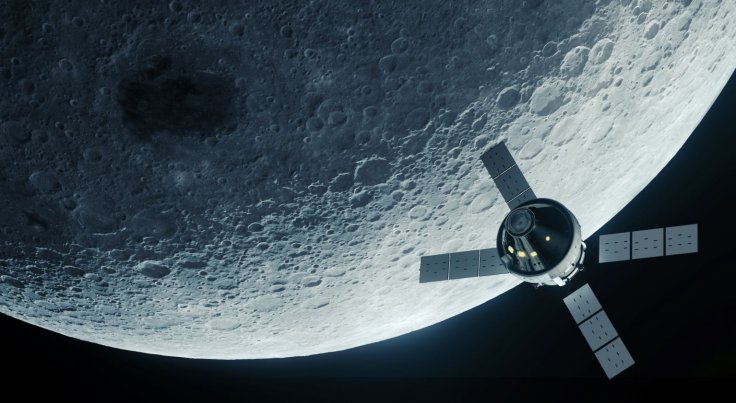
The four astronauts on board Artemis II went beyond Apollo 13’s distance of 248,655 miles at approximately 1:56 p.m. ET, reaching 248,656 miles while flying past the moon at a speed close to 2,000 mph. The remarkable achievement comes nearly 56 years after Apollo 13 set the previous record on April 14, 1970. During that mission, the damaged spacecraft relied on the moon’s gravitational pull to swing back toward Earth, conserving its limited power following an onboard explosion.
New Milestone Achieved
NASA
Artemis II still has more to accomplish. The crew continues to push deeper into space with every passing moment, going farther than any humans ever have before. That record will keep extending until around 7:07 p.m., when they are scheduled to turn around and begin heading back toward Earth.
The mission’s record-breaking distance is expected to reach roughly 252,757 miles before the spacecraft begins its return journe. From that point, Artemis II’s Orion capsule will return toward Earth, with an arrival scheduled for around 8 p.m. on Friday.
X
This milestone will take place just minutes after the capsule makes its closest pass by the moon, coming within about 4,000 miles of the lunar surface.
At the same time, the spacecraft will be in the middle of a communications blackout, lasting around 40 minutes, as the moon blocks signals between Orion and Earth. Contact is expected to be restored at about 7:25 p.m.
Even without communication, the astronauts won’t be idle. During this historic flyby, they’ll be closely watching the moon, including vast areas of its far side that no human has ever seen before.
Watching the Dark Side
Although humans first caught glimpses of the moon’s far side during Apollo 8 in 1968, large portions of it stayed hidden in darkness throughout the Apollo missions. Those crews orbited the moon for several days and did pass over the far side, but their missions were carefully timed so sunlight would illuminate the near-side landing areas.

NASA
As a result, much of the far side remained in shadow whenever their spacecraft moved above it.
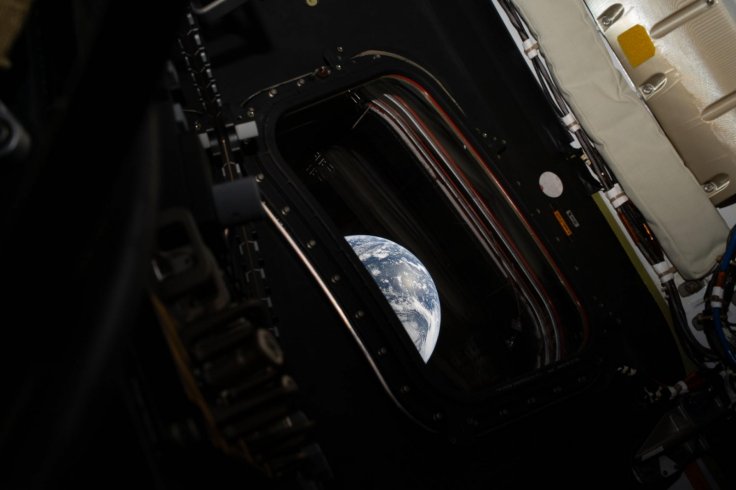
Artemis II, however, is set to offer a much clearer view. During its flyby, astronauts will be able to see the entire far side at once, with the moon appearing through the cabin windows about the size of a basketball held at arm’s length.
NASA
The flyby is expected to begin around 2:45 p.m. and continue until about 9:20 p.m., assuming everything stays on track.
To put the distance into perspective, the mission’s 252,757 miles is enormous. If Earth were the size of a soccer ball, the moon would look like a tennis ball placed roughly 30 feet away.
Artemis II is also able to surpass Apollo 13’s record by using the same clever principle of orbital mechanics. After looping around the moon, the spacecraft will rely on its momentum to head back toward Earth, needing only minor adjustments rather than firing its engines for a full return journey.
