

Russia Satellite Support and Hormuz Disruption Raise Fears of Global Energy Supply Crisis
Iran has reduced vessel traffic through the Strait of Hormuz by an estimated 95%. The strait, a narrow waterway between Iran and Oman that serves as the primary export corridor for roughly one-fifth of the world’s oil supply, now permits only a fraction of its normal daily transits.
Russian satellites conducted extensive surveillance operations across the Middle East to help Iran identify and strike U.S. and allied facilities. The Moscow has been providing Iran with satellite intelligence specifically aimed at U.S. forces and military infrastructure across the broader region.
Ukrainian President Volodymyr Zelensky alleged that Russia shared coordinates for more than 50 Israeli civilian energy facilities with Iran. Russia has not publicly responded to these specific allegations.
The satellite dimension extends into cyberspace. Russian and Iranian hackers are collaborating in coordinated cyberattacks on critical infrastructure across the Gulf region.
The combination of overhead intelligence and offensive cyber operations represents a layered support structure that Gulf States and Washington have struggled to counter in real time.
The Economic Fallout from a Closed Strait
The scale of the disruption has drawn comparisons to episodes that reshaped the global economy for years. Fatih Birol, director of the International Energy Agency (IEA), the Paris-based intergovernmental body that monitors global energy markets, described the current crisis as more severe than the oil shocks of 1973, 1979, and 2002.
IBT SG
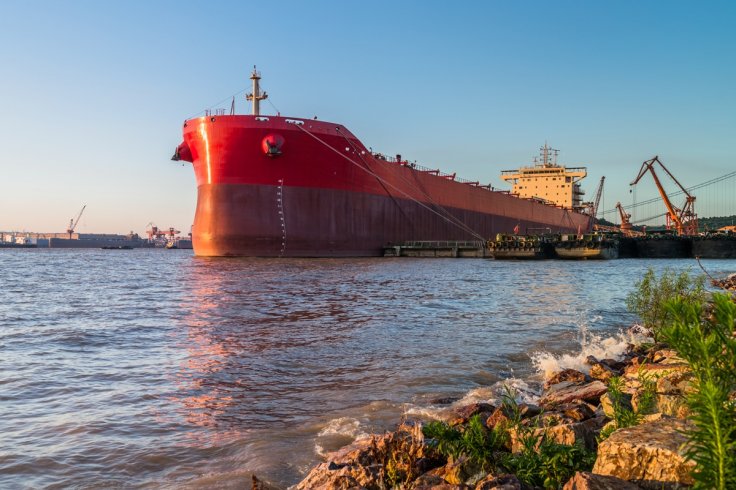
Shipping operators have responded by rerouting vessels around the Cape of Good Hope, the southern tip of Africa, adding between 10 and 14 days to transit times and driving freight costs up fivefold on key routes.
War risk insurance markets are recalibrating in parallel, adapting premiums in real time to the elevated threat environment while, so far, maintaining underwriting capacity.
The dangers are not confined to paper losses for shipping firms. An oil tanker operating near Doha, the capital of Qatar, was struck by an unidentified projectile in early April 2026, underscoring the physical risk to vessels attempting any transit through Gulf waters.
The Gulf Cooperation Council (GCC), the six-member bloc comprising Saudi Arabia, the United Arab Emirates, Kuwait, Qatar, Bahrain, and Oman, lacks the unilateral military capability to reopen the strait without external support.
Freepix
The Cascading Human Cost beyond Oil Markets
Energy analysts at E3G, a London-based climate and energy security think tank, argue that chokepoint vulnerability is structurally unavoidable for oil and gas importers; regardless of how well-supplied a market appears during periods of calm.
The Hormuz closure has validated that thesis in the starkest possible terms, with consequences radiating far beyond the Gulf’s major producers and their trading partners.
Seventeen of the world’s poorest countries import more than 30% of their cereal needs, and the energy price shock is now compounding food insecurity across those nations.
Fuel costs feed directly into fertilizer prices, irrigation, and agricultural transport, meaning a prolonged Hormuz closure translates into caloric deficits in countries that have no strategic petroleum reserves and no economic buffer.
The energy has reemerged as a central instrument of geopolitical coercion, with a scope and persistence that outpaces anything seen in prior decades.
The satellite intelligence layer adds a dimension that previous energy crises did not carry: a third-party state actor with global space infrastructure quietly extending the operational reach of a regional power that would otherwise lack the targeting precision to sustain a disruption of this magnitude.
For American households, the consequences arrive at the gas pump, in heating bills, and in the consumer goods prices that track closely with freight costs. The fivefold increase in shipping rates on rerouted voyages is already working its way through supply chains.
NOTE: This article was produced with the assistance of an artificial intelligence tool but thoroughly vetted by human editor.
